
Process mapped is handled by this skill in a customer-readable, reusable workflow.
Exceptions surfaced is handled by this skill in a customer-readable, reusable workflow.
SB_ISO_Workflow_maker@SB_ISO_Workflow_makerFree | Workflow MappingIncluded in bundle10 minutes
What is this?
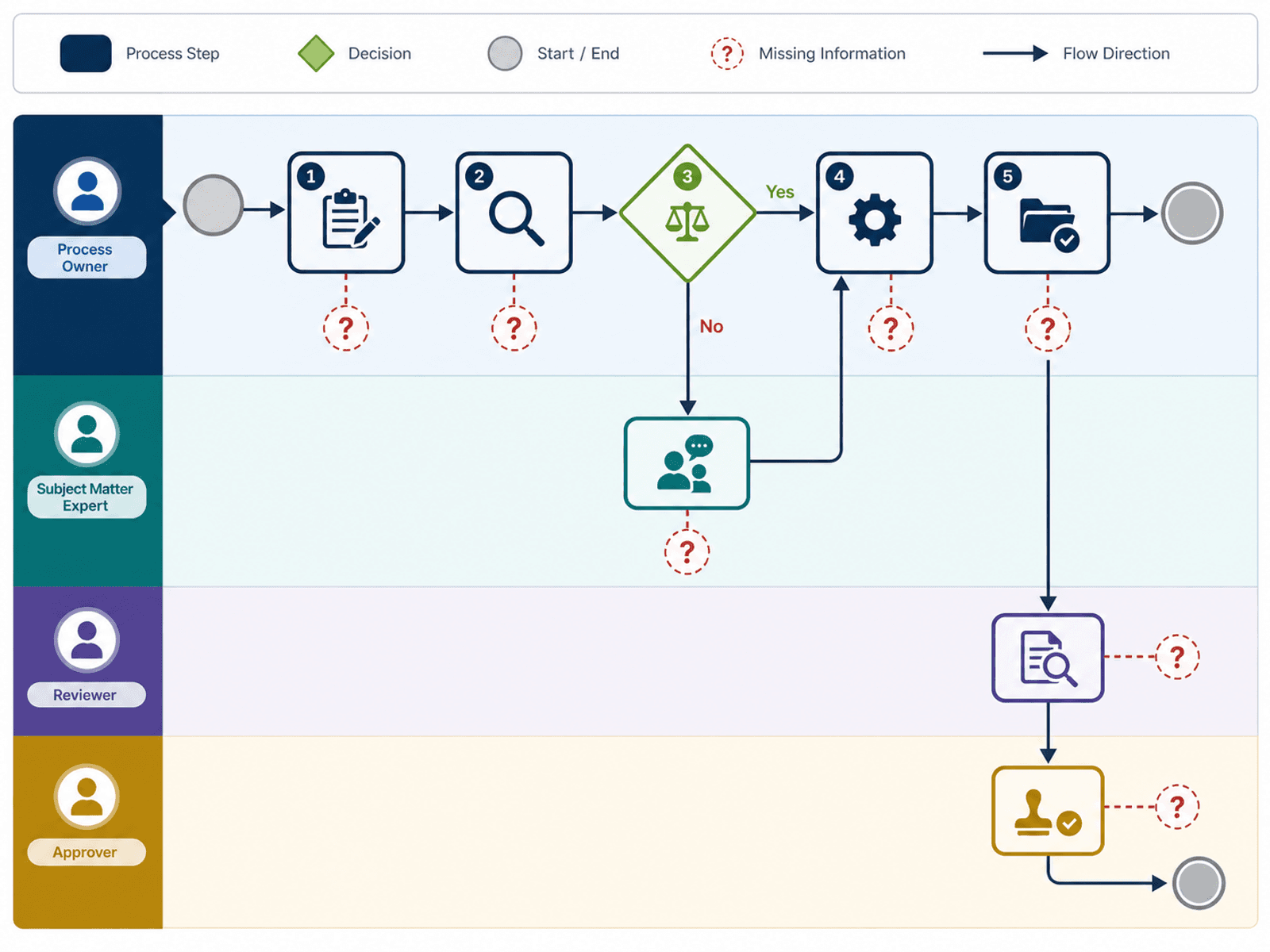
Automation fails when the real process is still trapped in chats, meetings, and personal memory. ISO Workflow Maker turns rough process notes into a reviewable workflow: purpose, inputs, outputs, owners, steps, decisions, exceptions, and approval points. When useful, it prepares Business Process Model and Notation (BPMN) logic, which is a standard way to describe a workflow for process tools. The buyer gets a process that can be reviewed before AI is asked to document, automate, or build around it.
When this helps
What you get
- Process intake
- Workflow logic
- BPMN-ready structure
- Confirmation checklist
Use it when
- The real process still lives in people's heads, chats, or meetings, and no one has turned it into a clear operating flow yet.
- You need to clarify who does each step, who approves, when work is handed off, when it returns, and how exceptions should be handled.
- You want to turn a vague process into a BPMN-ready or best-practice workflow draft that the team can review, assign, improve, and later automate.
Not the right fit when
- It does not certify ISO compliance by itself. It creates an ISO-style workflow draft that still needs owner review.
What this prepares next
Clearer operations -> Better automation input -> Less process guesswork
Why this is stronger than asking AI once
Asking AI to write a procedure can create a polished document while still hiding missing roles, handoffs, exceptions, and approval points. ISO Workflow Maker is stronger because it turns rough process notes into a structured workflow with steps, actors, decisions, controls, and a Business Process Model and Notation (BPMN)-ready map for later automation. The buyer can review how the work actually flows instead of approving a nice-looking paragraph. Boundary: It does not certify ISO compliance by itself; it creates an ISO-style workflow draft that still needs owner review.
Included interface patterns
Process Intake
A guided intake template for turning rough notes into process inputs, outputs, purpose, and boundary.
Plain-English process discovery form.BPMN Confirmation
A confirmation checklist that prevents XML generation before the process logic is approved.
Approval-ready BPMN modeling checklist.Process Illustration Prompt
A clean image prompt for explaining the confirmed workflow to non-technical stakeholders.
Reusable process illustration prompt.